Work titles are retained in Chinese; references link to the original sources.
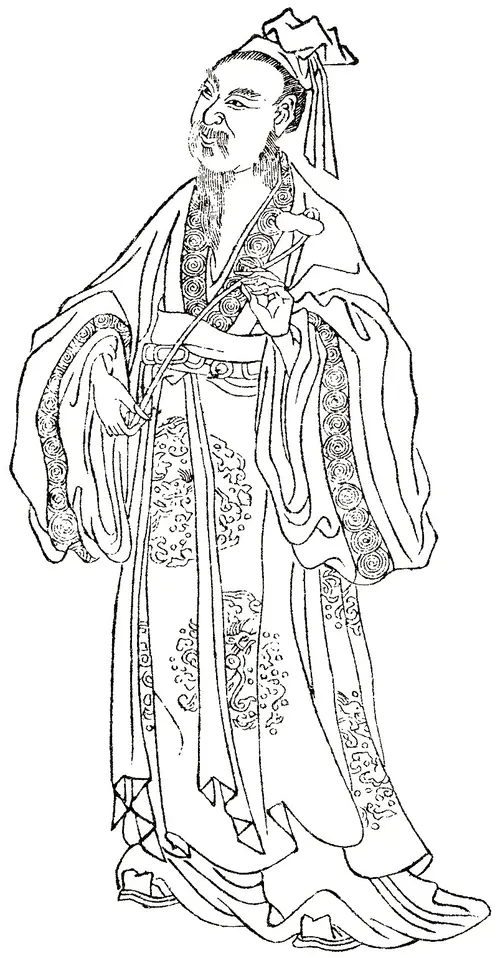
Wang Xizhi(王羲之)
Eastern Jin · c. 303–361; alternatively, 321–379
Courtesy name Yishao. Born in Linyi, Langya, he later lived in Kuaiji. He served as Inspector of Jiangzhou, Administrator of Kuaiji and General of the Right Army. His life combined aristocratic political service with calligraphy; later generations revered him as the “Sage of Calligraphy.”
Biography
Wang Xizhi, courtesy name Yishao, belonged to the Wang clan of Langya. The histories describe his grandfather Wang Zheng as an official in the Department of State Affairs and his father Wang Kuang as Governor of Huainan. Wang Dun and Wang Dao were older cousins of his father, not his father. 《晉書》 states that Wang Kuang advocated Emperor Yuan of Jin’s move south, showing the family’s close connection with the founding of the Eastern Jin regime. Research presents two proposed sets of life dates: approximately 303–361 and 321–379. The birth date from one set must not be combined with the death date from the other.[1][2]
《晉書》 describes him as a quiet young man who won Zhou Yi’s appreciation at thirteen and later became known for his frank speech and calligraphy. The marriage story of his reclining bare-bellied on an eastern couch also comes from historical biography: Xi Jian sent a representative to Wang Dao’s household to choose a son-in-law, and Wang Xizhi’s unselfconscious manner led to his marriage to Xi Jian’s daughter. These episodes illuminate aristocratic social relations and the later shaping of his character, but their details should not be treated as an unedited diary.[1]
The traditional account of his early training names Lady Wei as his first teacher. He subsequently broadened his study by drawing on earlier calligraphers such as Zhong Yao and Zhang Zhi. Lady Wei may have taught him in person; Zhong Yao and Zhang Zhi lived before him and were models studied through their works. There are too few contemporary records to assign an exact age to his study of each script. Nor did his reputation emerge solely from the single day associated with 《蘭亭序》: 《晉書》 describes his calligraphy as becoming more accomplished in later life.[1][6]
Wang Xizhi began as a gentleman in the imperial library. He joined the staff of Yu Liang, General Who Conquers the West, as a military adviser, rose to chief of staff, and also served as General Who Pacifies the Distant and Inspector of Jiangzhou. Before his death, Yu Liang submitted a memorial praising his judgment. Wang did not accept every subsequent summons to high central offices, including palace attendant and Minister of Personnel. The biography preserves an exchange in which Yin Hao urged him to take office and Wang explained his reluctance to remain at the centre of government, while expressing willingness to undertake missions in the Guanlong and Bashu regions. His withdrawal involved particular political choices; he had not ignored public affairs from his youth.[1]
He later became General of the Right Army and Administrator of Kuaiji, hence the familiar name “Wang of the Right Army.” When Yin Hao and Huan Wen were at odds, he urged coordination between the court and regional commands. Before Yin Hao’s northern campaign, Wang warned that a hurried advance would endanger the foundations of the southern regime and wrote to dissuade him. After the defeat, he again advocated reducing taxes and labour obligations, protecting livelihoods and securing the Yangtze, rather than launching distant campaigns without adequate troops and provisions. These arguments concern taxation, military transport and local administration; they should not be removed from his biography to leave only the Lanting gathering.[1]
During famine in Kuaiji and nearby areas, 《晉書》 records that he opened the granaries to provide relief loans. He repeatedly petitioned about heavy taxes and labour demands in the Wu and Kuaiji region, and some proposals were adopted. A letter to Xie An addresses grain-transport deadlines, official supervision, abuses in granary management and flight caused by compulsory service. These lengthy political letters, alongside the shorter letters transmitted under his name, show that he was an official who dealt directly with regional administration.[1]
In late spring of 353, the ninth year of the Yonghe era, Wang Xizhi gathered with Xie An, Sun Chuo, Xu Xun and others at Lanting in Shanyin, Kuaiji. They performed a purification ritual, floated wine cups along a stream and composed poems. His 《蘭亭集序》 moves from that day’s landscape and companionship to the brevity of life and the experience of future readers, ending with an explanation of the record of the participants’ poems. The famous running-script 《蘭亭序》 is closely connected with this essay, but the original manuscript no longer survives. Tang traced copies, engraved model-letter collections from the Song onward, and later printed images represent different stages of transmission.[1][3][7]
In the eastern region he associated with Xie An, Sun Chuo, Li Chong, Xu Xun, Zhi Dun and others, and took an interest in landscape, health cultivation and Daoism. 《晉書》 tells of his love of geese, his writing 《道德經》 for a Daoist in exchange for geese, and his inscriptions on fans. These stories show his reputation entering everyday exchanges, but they remain narratives in historical biography. They do not establish that an identifiable original autograph of 《換鵝道德經》 survives today.[1]
Conflict with Wang Shu provided the immediate background to his resignation. 《晉書》 says the two had been similarly renowned in their youth but later fell out over rank and etiquette. After Wang Shu became Inspector of Yangzhou and scrutinised Kuaiji’s administration, Wang Xizhi felt insulted. In 355, the eleventh year of Yonghe, he swore before his parents’ graves to leave office. The account of his feelings may incorporate the historian’s judgment, but the resignation oath and political relationships cannot be reduced to a simple story of retiring because he loved scenery.[1]
After leaving office he travelled among mountains and rivers with scholars of the eastern region, and studied medicinal substances and health practices with the Daoist Xu Mai. 《晉書》 preserves a letter to Xie Wan describing his own planting of mulberry and fruit trees and his enjoyment of the countryside with his descendants. When Xie Wan became military commander of Yuzhou, Wang also advised him to be frugal and maintain close relations with his subordinates. His letters served domestic, friendly and political purposes; the later category of short personal letters should be understood within these contexts of exchange.[1]
《晉書》 gives his age at death as fifty-nine and states that his sons followed his wishes in declining posthumous honours. This age can be considered alongside the proposed dates of approximately 303–361, but it does not directly verify every detail in later chronologies. Wang Ningzhi, Wang Huizhi, Wang Caozhi and Wang Xianzhi, among his sons, appear in the historical accounts. Wang Xianzhi’s reputation came to be paired with his father’s, forming the lineage later known as the “Two Wangs.”[1][2]
After his death, Wang Xizhi’s works were collected, copied and assembled into engraved model-letter collections. Emperor Taizong of Tang’s admiration particularly strengthened his position as a model. Surviving copies of 《蘭亭序》, transmitted versions of 《快雪時晴帖》 and 《喪亂帖》, and the engraved tradition of 《十七帖》 allow us to discuss how later generations understood his calligraphy. Treating them all as original Eastern Jin paper and ink would, however, confuse his creative work with more than a thousand years of copying.[3][4][5][8][10]
Works and writings
- 《蘭亭集序》: an essay composed in 353, the ninth year of Yonghe; the original calligraphy is lost. Palace Museum research and collection descriptions of Tang copies of 《蘭亭序》 support comparison between transmitted versions. The essay written that day, the autograph described in tradition, and copies or engravings visible from the Tang onward must be distinguished.[1][3][7]
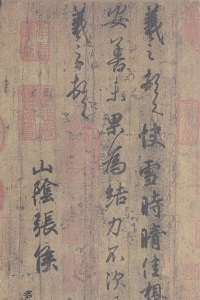
- 《快雪時晴帖》: a short letter greeting a friend, transmitted in a version held by the National Palace Museum, Taipei. The museum notes that the surviving work is generally regarded as a fine Tang copy. Its text does not provide enough information to determine the original year of writing.[4][11]
- 《喪亂帖》: a Tang copy of Wang Xizhi’s letters held by Tokyo National Museum. Discussion of family grief in the text and the movement of its running and cursive brushwork should make clear that the object being viewed is a copy.[5]
- 《平安》《何如》《奉橘》: three letters preserved at the National Palace Museum, Taipei, in a Tang copy made by tracing the outlines and filling them with ink. 《奉橘》 originally followed 《何如》 and only gradually came to be treated as a separate letter.[8]
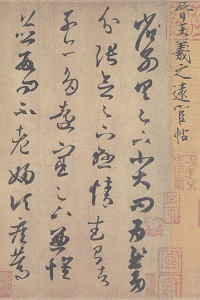
- 《遠宦帖》: a letter to Zhou Fu, preserved at the National Palace Museum, Taipei, in an ink copy traced from outlines. Its text also appears in engraved versions of 《十七帖》. The texts are related, but ink copies and stone engravings convey different kinds of information about brushwork.[9]
- 《十七帖》: an engraved model-letter tradition assembled from several cursive letters by Wang Xizhi. Its title comes from the opening of the first letter; it is not a single long text that he wrote in one sitting.[9][10]
- 《上虞帖》: a Tang copy held by Shanghai Museum. The museum records collectors’ seals and evidence of transmission from the Southern Tang and Northern Song onward.[15]
- 《寒切帖》: an outline-traced Tang copy held by Tianjin Museum, also called 《謝司馬帖》. Its text is Wang Xizhi’s reply to an official surnamed Xie; the surviving object is not original Eastern Jin paper and ink.[16]
- 《雨後帖》: a Song copy held by the Palace Museum, Beijing. It illustrates Song methods of copying and preserving Wang Xizhi’s calligraphy; it does not establish that the original Eastern Jin paper survives.[12]
- 《樂毅論》: a celebrated small regular-script work traditionally attributed to Wang Xizhi, transmitted through copies and engraved models. Differences in character forms, damage and engraving affect our understanding of the brushwork.[3][13]
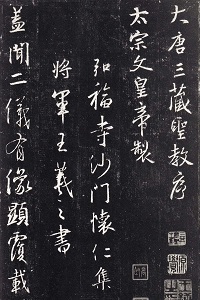
- 《懷仁集王羲之書聖教序》: a stele completed in 672, the third year of the Xianheng era of Tang, using characters selected by Huairen from existing examples of Wang’s calligraphy. It is a Tang compilation in stone, not a complete inscription written by Wang Xizhi during his lifetime.[10]
Relationships
- Wang Zheng and Wang Kuang: his grandfather and father respectively; Wang Kuang served as Governor of Huainan. Wang Dun and Wang Dao were older cousins of his father. Wang Dao played an important role in Eastern Jin politics.[1]
- Xi Jian and his daughter: Xi Jian was his father-in-law. The biography records the story of choosing the unselfconscious young man on the eastern couch; Xi Jian’s daughter became Wang Xizhi’s wife.[1]
- Lady Wei: traditionally named as his early teacher. Zhong Yao and Zhang Zhi were earlier models; direct instruction must be distinguished from later study of their works.[1][6]
- Yu Liang and Yu Yi: the former recruited him to his staff; the latter praised a letter in early cursive script, leaving an early assessment of a particular work.[1]
- Yin Hao and Huan Wen: powerful Eastern Jin statesmen connected with his advice on northern campaigns. Wang urged Yin Hao to use military force cautiously.[1]
- Xie An, Sun Chuo, Xu Xun and Zhi Dun: members of the cultural and social network around Kuaiji. Xie An also discussed public affairs and the experience of growing older with him.[1]
- Wang Shu: Inspector of Yangzhou. Administrative scrutiny of Kuaiji and earlier grievances brought him into conflict with Wang Xizhi and contributed to Wang’s resignation in 355.[1]
- Xu Mai: a Daoist friend with whom he travelled and pursued medicinal health practices after leaving office. Xie Wan: a friend and official whom he advised through letters.[1]
- Wang Ningzhi, Wang Huizhi, Wang Caozhi and Wang Xianzhi: among his sons. Wang Xianzhi and his father became known as the “Two Wangs,” although their styles and reputations developed in distinct ways.[1]
Assessment
- 《晉書·王羲之傳》 preserves comparisons of his brush movement to floating clouds and a startled dragon, showing that the history compiled in the Tang still recorded his early reputation. Its claim that he excelled particularly in “clerical script” uses an ancient script category that cannot simply be equated with what is now called Han clerical script.[1]
- Yu Yi felt that Zhang Zhi’s earlier manner had reappeared when he saw Wang Xizhi’s early-cursive reply to Yu Liang. This praise recorded in 《晉書》 concerns a particular letter and can be read alongside the biography’s account of Wang’s calligraphy reaching greater refinement in later life.[1]
- In a statement quoted by 《晉書》, Wang Xizhi compared his own calligraphy with that of Zhong Yao and Zhang Zhi. This reveals his deliberate selection of earlier models. It also reminds us not to project the later title “Sage of Calligraphy” back into his lifetime as an already fixed ranking.[1]
- Emperor Taizong of Tang’s appraisal appended to 《晉書》 compares Wang Xizhi with Zhong Yao, Wang Xianzhi and others, ultimately praising Wang as supremely accomplished. Taizong valued the balance achieved within the inclination and movement of his strokes. This is important evidence of Tang imperial taste and policies toward calligraphy, rather than an assessment by Wang’s Eastern Jin contemporaries.[1]
- In 《書斷》, Zhang Huaiguan placed several of Wang Xizhi’s scripts in the highest, “divine” category and described how he drew widely from earlier masters to create his own manner. Zhang also weighed the gains and losses involved in modifying older methods. Quoting only the highest ranking would omit this specific analysis.[13]
- In its biography of Wang Xianzhi, 《晉書》 compares father and son. Although contemporaries admired the son’s elegance, some considered his structural strength inferior to his father’s. The paired name “Two Wangs” encompasses different aesthetic judgments; it does not mean that they wrote in exactly the same way.[1]
- Palace Museum research on Tang copies of 《蘭亭序》 reminds readers to identify the version on which a discussion of its brushwork is based. Copying, stone engraving and rubbing each involve different losses and reinterpretations.[3][7]
- The National Palace Museum, Taipei, catalogues 《快雪時晴帖》, 《平安何如奉橘三帖》 and 《遠宦帖》 separately, making Wang’s everyday letters available as a group of works for study. They differ in content, methods of transmission and occasions of writing; 《蘭亭序》 alone cannot stand for all his calligraphy.[4][8][9][11]
Related works(21)
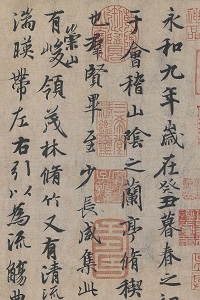 蘭亭序晉 · 行書 · 5 頁
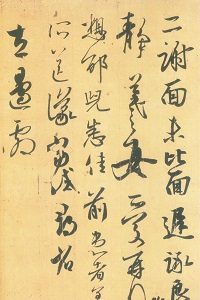 二謝帖晉 · 行書 · 1 頁
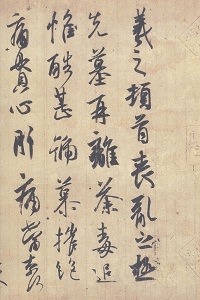 喪亂帖晉 · 行書 · 2 頁
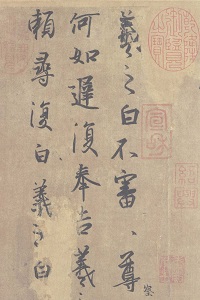 何如帖晉 · 行書 · 1 頁
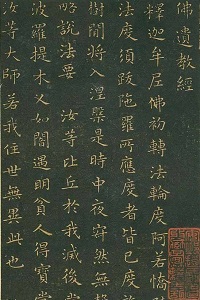 佛遺教經晉 · 楷書 · 19 頁
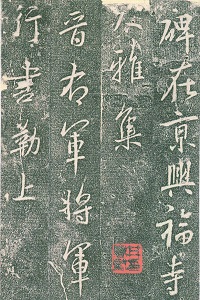 興福寺斷碑晉 · 行書 · 22 頁
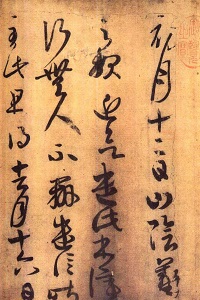 初月帖晉 · 草書 · 2 頁
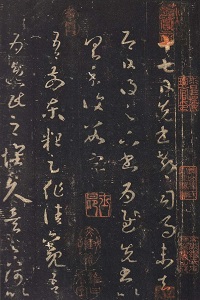 十七帖晉 · 草書 · 28 頁
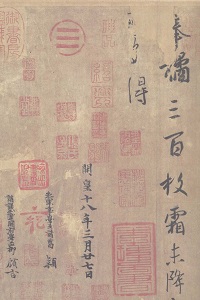 奉橘帖晉 · 行書 · 1 頁
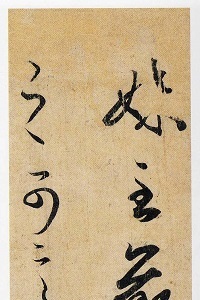 妹至帖晉 · 草書 · 1 頁
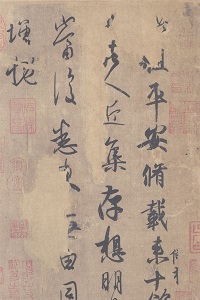 平安帖晉 · 行書 · 1 頁
 快雪時晴帖晉 · 行書 · 1 頁
 遠宦帖晉 · 草書 · 2 頁
 集王聖教序晉 · 行書 · 36 頁
 黃庭經晉 · 楷書 · 16 頁
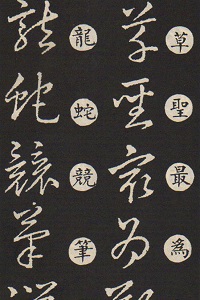 草訣歌晉 · 草書 · 82 頁
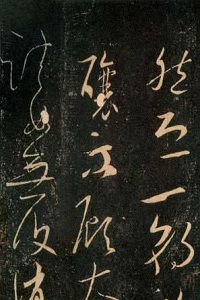 一朝帖晉 · 草書 · 1 頁
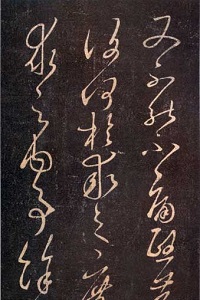 又不能帖晉 · 草書 · 2 頁
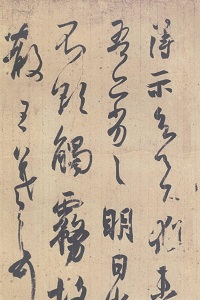 得示帖晉 · 草書 · 1 頁
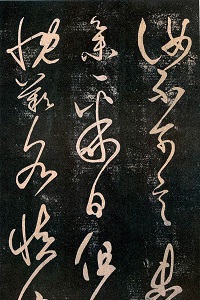 汝不帖晉 · 草書 · 2 頁
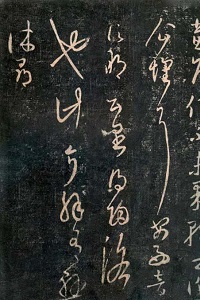 荀侯帖晉 · 草書 · 1 頁
Timeline
- Proposed birth years in the two sets of life dates. The historical biography contains no direct birth record that resolves the disagreement.[1][2]
- Later writings on calligraphy preserve the tradition of instruction by Lady Wei, followed by a manner drawing on Zhong Yao and Zhang Zhi.[1][6]
- Served in the imperial library, on Yu Liang’s staff and as Inspector of Jiangzhou, then as General of the Right Army and Administrator of Kuaiji.[1]
- Participated in the Lanting gathering in the ninth year of Yonghe and composed 《蘭亭集序》.[1][3]
- Opposed Yin Hao’s hurried northern campaign and discussed grain transport, taxation, labour service and relief. Opened granaries during famine in Kuaiji.[1]
- Swore before his parents’ graves to resign in the eleventh year of Yonghe, ending his service in Kuaiji.[1]
- Travelled with Xu Mai and wrote to Xie Wan about rural life and principles of government.[1]
- Two proposed death dates. 《晉書》 gives his age at death as fifty-nine.[1][2]
- Copying and imperial collecting established his calligraphy as a central model for later generations; transmitted versions of 《蘭亭序》 and other works developed.[3][4][5]
- Huairen’s stele 《聖教序》 was completed using selected characters from Wang’s works, rearranged after his death.[10]
References
- 《晉書》, vol. 80: biographies of Wang Xizhi and his sons
- Institute of History and Philology, Academia Sinica: authority record for Wang Xizhi
- The Palace Museum, Beijing: study of transmitted versions of 《蘭亭序》
- National Palace Museum, Taipei: 《快雪時晴帖》
- Tokyo National Museum: 《喪亂帖》
- Institute of Calligraphy, Peking University: Wang Xizhi and Lady Wei
- The Palace Museum, Beijing: 《蘭亭序》, a copy attributed to Chu Suiliang
- National Palace Museum, Taipei: 《平安何如奉橘三帖》
- National Palace Museum, Taipei: 《遠宦帖》
- The Palace Museum, Beijing: 《集王羲之書聖教序》
- National Palace Museum, Taipei: collection record for 《快雪時晴帖》
- The Palace Museum, Beijing: the Song copy of 《雨後帖》
- Zhang Huaiguan: 《書斷》, middle volume
- Wikipedia: Wang Xizhi — leads on his life dates and works
- Shanghai Museum: the Tang copy of 《行書上虞帖》
- Tianjin Municipal Bureau of Culture and Tourism: the Tang copy of 《寒切帖》 in Tianjin Museum