Work titles are retained in Chinese; references link to the original sources.
Wang Duo(王鐸)
Late Ming and early Qing · 1592–1652
Courtesy name Juesi; a native of Mengjin, Henan. He reached high office under Ming and served Qing after its fall. Study of old models and large running-cursive compositions developed together; both his art and dynastic choices shaped his later reputation.
Biography
Wang Duo, courtesy name Juesi, came from Mengjin. After passing the examination in 1622, he served in the Hanlin Academy and Ministry of Rites, becoming a Grand Secretary under the Southern Ming Hongguang regime. Following Nanjing’s fall in 1645 he entered Qing service, eventually becoming Minister of Rites, and died in 1652. This political transition cannot be omitted: an exclusively early-Qing label distorts his earlier career and contexts.[1][2][3]
He wrote poetry and prose and painted, while calligraphy continued through service and displacement. A Taipei work of his own poems records residence at Mengzhuang’s Shanzhi Garden in 1643 amid warfare. The handscroll was later remounted as an album, with some passages even reversed in order. Present format may differ from original format and must be considered in reading the text and composition.[2]
He copied model books diligently. Taipei records a long habit of alternating a day of copying with a day of free writing; Palace Museum research distinguishes studies of antiquity from original poetry and social commissions. Zhong Yao, the Two Wangs, Yan Zhenqing, Mi Fu and 《淳化閣帖》 informed his methods. Large running-cursive works do more than enlarge old structures: copying established turns and connections which free writing reorganised.[1][2][6]
The National Museum’s 《臨淳化閣帖書卷》 copies letters of Jin figures including Yu Yi, Xie Fan and Wang Huizhi. Its steady force and balance of firmness and suppleness complement the trembling lines and transitions from dense to dry ink in Taipei’s poetry album. Wang also published engraved 《擬山園帖》 and 《琅華館帖》, combining transmission with reworking.[1][2][4]
His art did not abruptly change on the day Ming fell. Beijing’s 1646 《行書詩軸》 and a Taipei colophon of the same year follow his entry into Qing. Comparison with the 1643 album shows related powerful rhythms applied to different texts, formats and occasions. Later ethical criticism of divided loyalty and judgments of technique can be considered together, without substituting one verdict for analysis.[2][3][5]
Works and writings
- 《書詩》 album: several original regulated poems, dated 1643 at Mengzhuang’s Shanzhi Garden. A former scroll later became album leaves, some mounted out of order. Taipei analyses ink and trembling lines.[2]
- 《臨淳化閣帖書卷》: National Museum of China; copies letters by several Jin writers and directly documents his study of antiquity.[4]
- 《行書詩軸》: Palace Museum, written in 1646 after entry into Qing service, described as an outstanding late running-script work.[5]
- 《擬山園帖》 and 《琅華館帖》: engraved compilations of Wang’s writing. Original ink, editorial carving and later impressions require separate consideration.[1][3]
Relationships
- The Chongzhen and Southern Ming Hongguang courts: Wang held successive late-Ming posts and entered the Hongguang administration.[1][3]
- The Shunzhi court: served Qing after Ming’s fall and became Minister of Rites, prompting negative later political judgments.[1][2]
- Wang Xizhi, Wang Xianzhi, Zhong Yao, Yan Zhenqing and Mi Fu: models studied through works, not directly encountered teachers.[1][6]
- Huang Tingjian and Zhu Yunming: Taipei identifies comparable influence in the rhythmic lines of his cursive writing.[2]
Assessment
- 《清史稿》, vol. 503, groups Wang with Fu Shan as representative masters from the region north of the Yellow River at the Ming–Qing transition. This is a later historical placement, not unanimous contemporary judgment.[7]
- The Palace Museum emphasises running and cursive scripts, expansive handling and powerful, precarious forms, grounded in long study of model books.[1]
- Taipei identifies trembling rhythms, dense ink gradually drying and arm movement in forming lines. These observations are more specific than wild abandon.[2]
- The National Museum’s steady yet supple assessment of 《臨淳化閣帖書卷》 shows why copied works belong alongside original cursive poems in a full account.[4]
- Taipei explicitly notes negative political judgments of his service to both dynasties. Artistic achievement and political choice both belong to reception history; neither should be hidden.[2][3]
Related works(2)
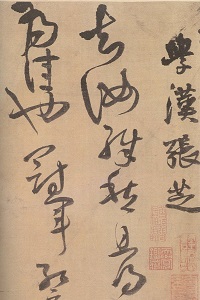 草書臨淳化閣帖
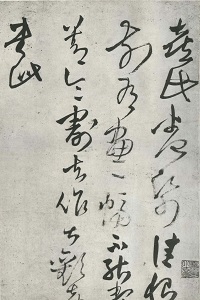 草書唐詩卷
草書唐詩卷Timeline
- Born in Mengjin, Henan.[1][2]
- Passed the metropolitan examination and entered Ming official service.[1][2]
- Wrote his own poems while staying at Mengzhuang’s Shanzhi Garden; now preserved as Taipei album leaves.[2]
- The Southern Ming Hongguang regime fell, and Wang entered Qing service.[1][2]
- Wrote Beijing’s 《行書詩軸》; a Taipei colophon also bears this date.[3][5]
- Died; Qing posthumous name Wen’an.[1][3]